
SDGs-WADDAN







This report presents a structured alignment of WADDAN’s major activities and ongoing projects with the United Nations Sustainable Development Goals (SDGs). It is developed exclusively from WADDAN’s official organizational profile and project documentation. The purpose of this report is to clearly demonstrate how WADDAN’s work contributes to national and global development priorities and to provide a transparent, SDG-linked narrative suitable for publication on the WADDAN website and for sharing with donors, partners, and stakeholders.
Organizational Commitment to Sustainable Development
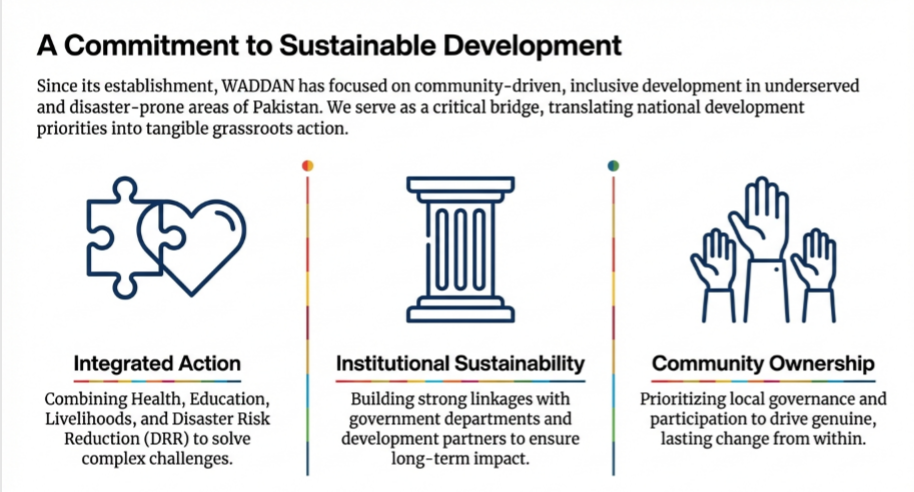
Since its establishment, WADDAN has focused on community-driven, inclusive, and sustainable development in underserved and disaster-prone areas of Pakistan. The organization’s integrated approach covering health, education, livelihoods, disaster risk reduction, gender development, governance, and climate resilience directly supports the achievement of multiple SDGs. WADDAN’s projects emphasize long-term impact, community ownership, and institutional sustainability through strong linkages with government departments and development partners.
SDG Alignment Overview
WADDAN’s programs contribute directly or indirectly to the following Sustainable Development Goals:
- SDG 1: No Poverty
- SDG 2: Zero Hunger
- SDG 3: Good Health and Well-being
- SDG 4: Quality Education
- SDG 5: Gender Equality
- SDG 6: Clean Water and Sanitation
- SDG 8: Decent Work and Economic Growth
- SDG 9: Industry, Innovation and Infrastructure
- SDG 10: Reduced Inequalities
- SDG 11: Sustainable Cities and Communities
- SDG 13: Climate Action
- SDG 16: Peace, Justice and Strong Institutions
- SDG 17: Partnerships for the Goals
Detailed SDG-wise Contribution
SDG 1: No Poverty
WADDAN contributes to poverty reduction through livelihood support, cottage industry promotion, social protection awareness, and emergency relief operations. Handloom training programs for youth and women, linkages with markets, and collaboration with government-funded initiatives have improved household incomes and economic resilience. Awareness campaigns for BISP and Ehsaas programs have enhanced access to social safety nets for vulnerable populations.
SDG 2: Zero Hunger
Through disaster response and humanitarian relief operations, WADDAN has provided food assistance to communities affected by floods, military conflict, and natural disasters. These interventions addressed immediate food insecurity and supported early recovery for displaced and vulnerable families.
SDG 3: Good Health and Well-being
Health is a core pillar of WADDAN’s work. Key contributions include:
- Reconstruction and rehabilitation of Basic Health Units (BHUs) in District Dir Upper.
- Establishment of Mother and Child Health (MNCH) Centers with labor rooms and neonatal care facilities.
- Strengthening primary healthcare services, including antenatal care, immunization, family planning, and basic diagnostics.
- Training of Traditional Birth Attendants (TBAs) to reduce maternal and neonatal mortality.
- Distribution of health and hygiene kits and promotion of preventive health practices.
These interventions have significantly improved access to quality healthcare, especially for women and children in remote areas.
SDG 4: Quality Education
WADDAN supports both formal and informal education through community awareness, capacity building, and skills-based training. Vocational training initiatives, particularly in handloom weaving, have enhanced practical skills and learning opportunities for unemployed youth and women.
SDG 5: Gender Equality
Gender equality is mainstreamed across WADDAN’s programs. Major achievements include:
- Establishment and strengthening of women’s organizations.
- Provision of maternal and neonatal healthcare services.
- Skills development and income-generation opportunities for women.
- Advocacy and awareness on women’s rights, reproductive health, and leadership.
These efforts have empowered women to actively participate in decision-making and community development.
SDG 6: Clean Water and Sanitation
WADDAN has improved water and sanitation infrastructure in rehabilitated BHUs by reinstalling water supply schemes and upgrading drainage and sanitation systems. Hygiene kit distribution and awareness sessions have further reduced the risk of waterborne diseases.
SDG 8: Decent Work and Economic Growth
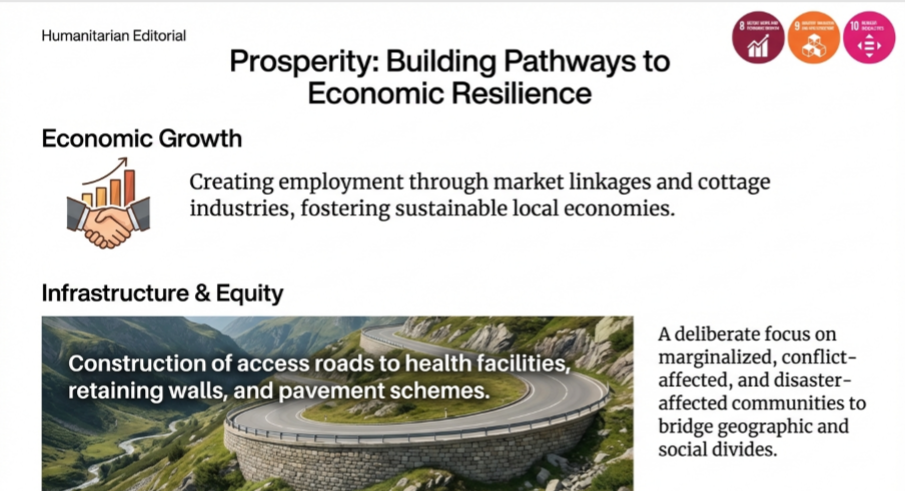
Through promotion of cottage industries, vocational training, and market linkages, WADDAN has created employment opportunities for youth and women. These initiatives contribute to local economic development and sustainable livelihoods.
SDG 9: Industry, Innovation and Infrastructure
WADDAN has implemented community physical infrastructure projects, including:
- Construction and rehabilitation of BHU buildings.
- Retaining walls and protection walls for disaster resilience.
- Access roads to health facilities.
- Pavements and small-scale community infrastructure schemes.
These interventions improve service delivery, safety, and connectivity in remote and disaster-prone areas.
SDG 10: Reduced Inequalities
WADDAN prioritizes marginalized, conflict-affected, and disaster-affected communities. Its inclusive approach ensures access to healthcare, social protection, and livelihood opportunities for women, the poor, and vulnerable groups, reducing geographic and social inequalities.
SDG 11: Sustainable Cities and Communities
By integrating Disaster Risk Reduction and Management (DRR/DRM) into health infrastructure and community projects, WADDAN enhances community resilience. Earthquake-resistant construction, flood protection measures, and preparedness planning support safer and more sustainable communities.
SDG 13: Climate Action
WADDAN integrates climate change adaptation and resilience into its programs through:
- DRR-focused infrastructure development.
- Awareness on climate risks and environmental protection.
- Promotion of climate-resilient livelihoods.
These efforts help communities adapt to climate-related hazards and reduce vulnerability.
SDG 16: Peace, Justice and Strong Institutions
Through post-conflict rehabilitation, advocacy, community mobilization, and transparent project implementation, WADDAN contributes to peacebuilding, social cohesion, and strengthened local institutions. Community-Based Organizations (CBOs) and Health Management Committees (HMCs) promote participatory governance and accountability.
SDG 17: Partnerships for the Goals
WADDAN’s achievements are strongly rooted in partnerships with government departments, UN agencies, international NGOs, and local organizations. Key collaborations include RAHA, UNHCR, KFW, IFAD-funded projects, CARAVAN, TDH, and provincial and district authorities.
Alignment of Ongoing Projects with the Sustainable Development Goals
This section presents a revised and SDG-aligned narrative of WADDAN’s ongoing projects. Each project has been rewritten from the start to clearly reflect its objectives, activities, and outcomes in line with the United Nations Sustainable Development Goals.
Project 1: Eco-Guardians – Empowering Communities through Nature-based Solutions
Project Overview
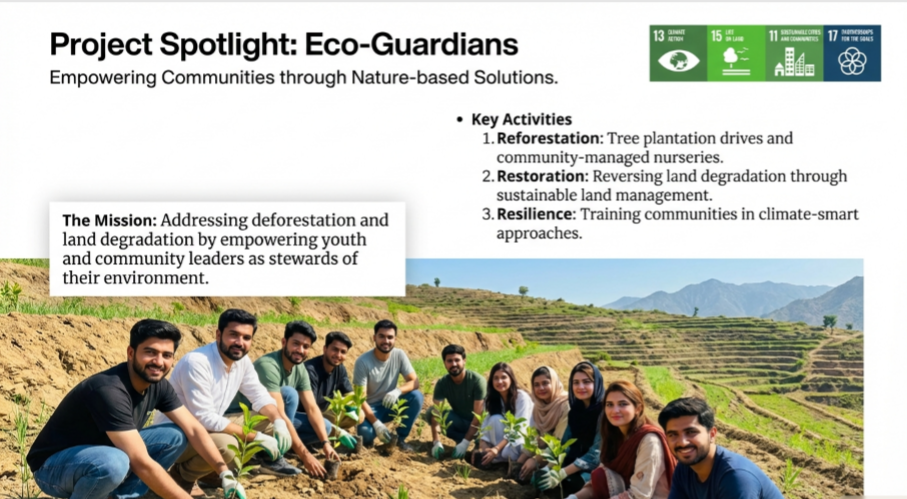
The Eco-Guardians project is a community-driven environmental initiative designed to address climate change, deforestation, land degradation, and environmental pollution in vulnerable regions of Pakistan. The project empowers local communities, particularly youth and community leaders, to become active stewards of their natural environment through practical, nature-based solutions.
SDG Alignment
This project is aligned with the following Sustainable Development Goals:
- SDG 13: Climate Action
- SDG 15: Life on Land
- SDG 11: Sustainable Cities and Communities
- SDG 17: Partnerships for the Goals
Contribution to the SDGs
Under SDG 13 (Climate Action), the Eco-Guardians project strengthens community resilience to climate change by raising awareness on climate risks and promoting adaptive practices. Communities are trained in climate-smart approaches such as reforestation, ecosystem restoration, and sustainable land management to reduce vulnerability to climate-related hazards.
In line with SDG 15 (Life on Land), the project focuses on protecting and restoring terrestrial ecosystems. Activities include tree plantation, establishment of community-managed nurseries, conservation of forest resources, and promotion of biodiversity-friendly practices. These interventions contribute to reversing land degradation and protecting local ecosystems.
The project also supports SDG 11 (Sustainable Cities and Communities) by promoting environmentally responsible community practices and strengthening local capacity to manage natural resources sustainably. By engaging communities in environmental planning and action, the project enhances long-term environmental sustainability and disaster preparedness at the local level.
Through strong collaboration with local authorities, community organizations, youth groups, and environmental stakeholders, the project advances SDG 17 (Partnerships for the Goals). These partnerships ensure community ownership, shared learning, and scalability of nature-based solutions beyond the project areas.
Project 2: Empowering Success in the Digital Marketplace – WADDAN’s Transformative E-commerce Training Initiative
Project Overview
The Empowering Success in the Digital Marketplace initiative is an economic empowerment and skills development project aimed at equipping youth, women, aspiring entrepreneurs, and unemployed individuals with practical e-commerce and digital business skills. The project responds to the growing opportunities in the digital economy and seeks to promote inclusive and sustainable livelihoods.
SDG Alignment
This project is aligned with the following Sustainable Development Goals:
- SDG 4: Quality Education
- SDG 8: Decent Work and Economic Growth
- SDG 9: Industry, Innovation and Infrastructure
- SDG 10: Reduced Inequalities
- SDG 17: Partnerships for the Goals
Contribution to the SDGs
In support of SDG 4 (Quality Education), the project delivers market-oriented, skills-based education through structured training programs, workshops, and digital learning platforms. Participants gain hands-on knowledge in online store creation, digital marketing, product sourcing, payment systems, logistics, and customer management.
Aligned with SDG 8 (Decent Work and Economic Growth), the initiative promotes self-employment, entrepreneurship, and access to decent income opportunities. By enabling participants to launch online businesses or secure employment in the e-commerce sector, the project contributes to sustainable economic growth and improved household incomes.
The project advances SDG 9 (Industry, Innovation and Infrastructure) by encouraging the use of digital technologies and innovation for inclusive economic development. The establishment of an online learning platform and engagement with digital marketplaces strengthen digital infrastructure and innovation capacity, particularly for underserved communities.
Through targeted outreach to marginalized groups, including women and rural populations, the project contributes to SDG 10 (Reduced Inequalities) by reducing digital and economic disparities. Improved access to digital skills and market linkages enables equitable participation in the digital economy.
The initiative also reflects SDG 17 (Partnerships for the Goals) through collaboration with private sector companies, e-commerce experts, training institutions, and mentors. These partnerships enhance the quality of training, provide mentorship opportunities, and support job placement and market access for participants.
WADDAN’s ongoing projects demonstrate a strong alignment with the United Nations Sustainable Development Goals by addressing environmental sustainability, climate resilience, digital inclusion, and economic empowerment. Through community-led environmental action and inclusive digital skills development, WADDAN continues to contribute to sustainable, resilient, and inclusive development in Pakistan.